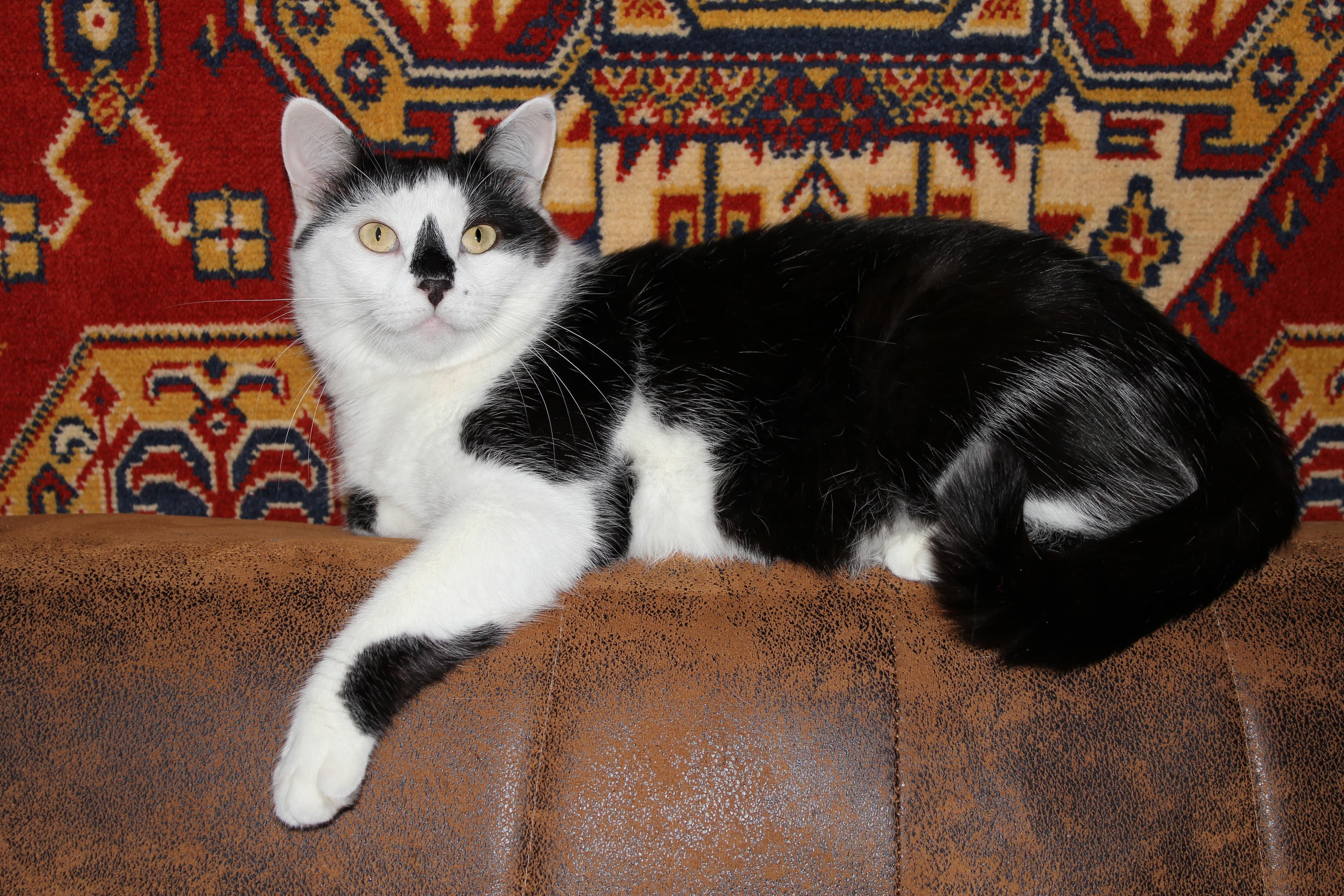
Welcome to the feline department of impossible furniture
There are normal sleeping positions. Then there is whatever your cat is doing right now.
Head twisted backwards. One back leg pointing north. Half the body on the sofa, half apparently held up by optimism. You look at the arrangement and wonder whether cats have bones or simply an internal agreement with gravity.
Most of the time, the answer is reassuringly simple: if your cat chose the position, settled into it and looks relaxed, they have probably found something that feels perfectly comfortable to them.
Cats are much better at being cats than we are
A cat’s body is built for agility. Their flexible spine and athletic range of movement allow postures that would send most humans directly to a physiotherapist.
That does not make them magical liquid. It simply means that a position which looks absurd from the outside may place no unusual strain on a healthy cat.
And there is another lovely detail: researchers looking at feline sleeping positions found no overall left-versus-right sleeping preference. [S2] So your cat is not secretly committed to a sacred side of the cushion. Today’s configuration may simply be today’s best configuration.
The famous belly-up pose
Few sights create more emotional confusion than a cat asleep on their back, belly fully exposed, paws folded in the air like a tiny opera singer waiting for applause.
It often appears when a cat is very relaxed in their surroundings. But do not turn that observation into a legal contract permitting belly rubs. A sleeping pose and an invitation to touch are two very different documents.
The experienced cat person admires from a respectful distance.
The cinnamon roll
When a cat curls tightly into a ball, nose tucked toward the body and tail wrapped around the edges, they become approximately 40% cat and 60% pastry.
Curling up can help conserve warmth and keeps vulnerable parts of the body tucked in. It is also compact, which matters when the chosen sleeping location is, for reasons known only to the cat, a basket two sizes too small.
The full-length sprawl
Then there is the opposite strategy: maximum cat.
Legs stretched, body long, perhaps occupying an entire bed diagonally despite weighing less than a bag of groceries. A relaxed sprawl may simply mean the temperature and surroundings allow your cat to abandon all attempts at compactness.
It also confirms a long-standing household rule: cats expand to fill the amount of space their humans hoped to use.
When a sleeping position deserves attention
The funny pose itself is rarely the important part. A change can matter more.
If your cat suddenly seems unable to settle, repeatedly changes position, avoids lying down, appears stiff, cries when moving, breathes unusually, stops eating or behaves very differently from normal, the sensible response is not to analyse the pose like a work of modern art. Contact a veterinarian.
Cats can be subtle when uncomfortable, so the useful question is not “Is this shape weird?” but “Is this normal for my cat, and do they otherwise seem comfortable?”
Their final trick: making us jealous
Perhaps the true mystery is not how cats sleep in impossible positions.
It is how they can do it for hours and wake up looking refreshed.
You, meanwhile, sleep eight hours on an ergonomically designed mattress and somehow injure your shoulder by turning over.
Evolution has favourites. It is time we accepted it.
Sources
S2 — No evidence for lateralized bias or preference in the sleeping positions of domestic cats.