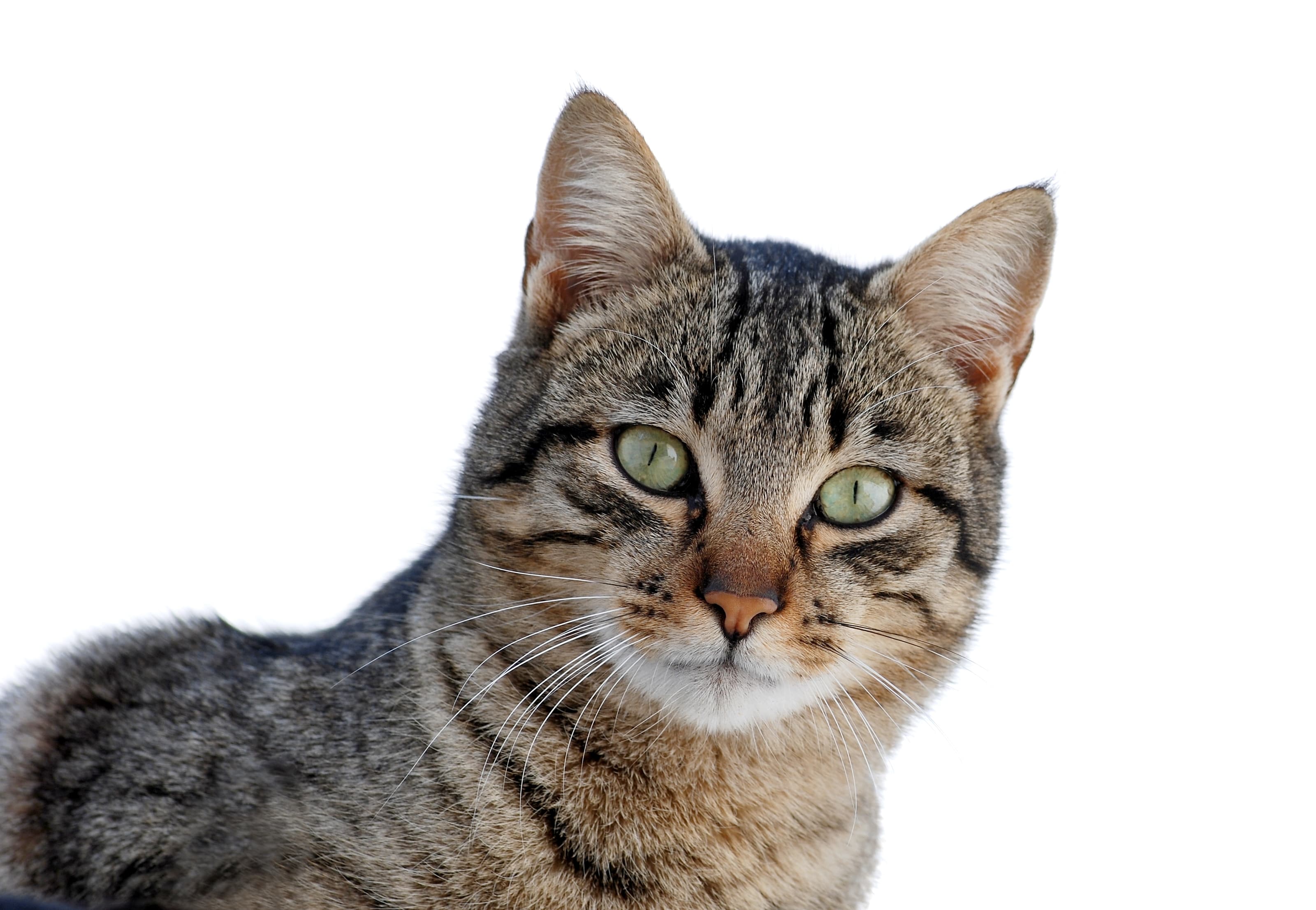
3:14 a.m. Two eyes. No explanation.
You wake in the dark with the unmistakable feeling that someone is looking at you.
They are.
Your cat is sitting at the edge of the bed, perfectly still, staring with the concentration of a detective in the final scene of a crime drama.
Naturally, the human brain asks the least helpful question first: Why?
The frustrating answer is that we cannot read a cat’s mind from a stare alone. But we do know that domestic cats pay close attention to human signals and can learn remarkably detailed household routines. [S1][S2]
So before you imagine a sinister motive, consider the much more likely explanations.
Possibility one: you are about to become breakfast staff
Cats are excellent students of routine.
If breakfast normally happens after you move, speak, touch your phone or open one eye, your cat has plenty of reasons to monitor this fascinating pre-breakfast stage.
To you, you are sleeping.
To the cat, the restaurant appears to be experiencing an unexplained delay.
A stare may therefore be less “I am guarding your soul” and more “I am waiting for management to wake up.”
Possibility two: you are simply interesting
Cats spend a surprising amount of time watching.
Windows, insects, other cats, moving shadows, cupboard doors — and us.
An asleep human is different from an awake human. We become quieter, more predictable and, importantly, much less likely to interrupt the observation process by saying “What are you doing?”
Your breathing changes. You move. You make noises you will later deny making.
From a cat’s point of view, this may be excellent television.
Possibility three: the best seat is currently occupied
Never underestimate logistics.
The cat may not be studying your emotional state at all. They may be studying the warm patch of duvet underneath your left arm.
Perhaps you are lying in their preferred position.
Perhaps they are calculating whether moving onto your chest will wake you.
Perhaps they already know the answer and simply do not care.
Does it mean your cat loves you?
It is tempting to turn every feline stare into a declaration of devotion. Cats do form social relationships with humans and use a mix of visual, vocal and other signals in those relationships. [S1][S2]
But a single behaviour rarely has one universal translation.
Context matters. A relaxed body, slow blinking, choosing to rest nearby and ordinary social behaviour tell a different story from a tense cat with flattened ears, agitation or repeated vocalising.
Miaoulogie’s preferred interpretation is therefore affectionate but cautious: your cat probably finds you important enough to keep track of. Whether this is love, curiosity or breakfast administration may vary by night.
When the staring suddenly changes
If a new nighttime behaviour appears together with restlessness, confusion, appetite changes, unusual vocalisation or other signs that your cat is not acting like themselves, mention it to a veterinarian — particularly in an older cat.
The stare itself is not a diagnosis. A meaningful change in behaviour can simply be a useful clue.
The final possibility
Of course, there is one explanation science may never fully eliminate.
Your cat has been watching you sleep because you look ridiculous.
Considering how often we photograph them in undignified positions, perhaps this is only fair.
Sources
S1 — Feline Cognition and the Role of Nutrition: An Evolutionary Perspective and Historical Review.