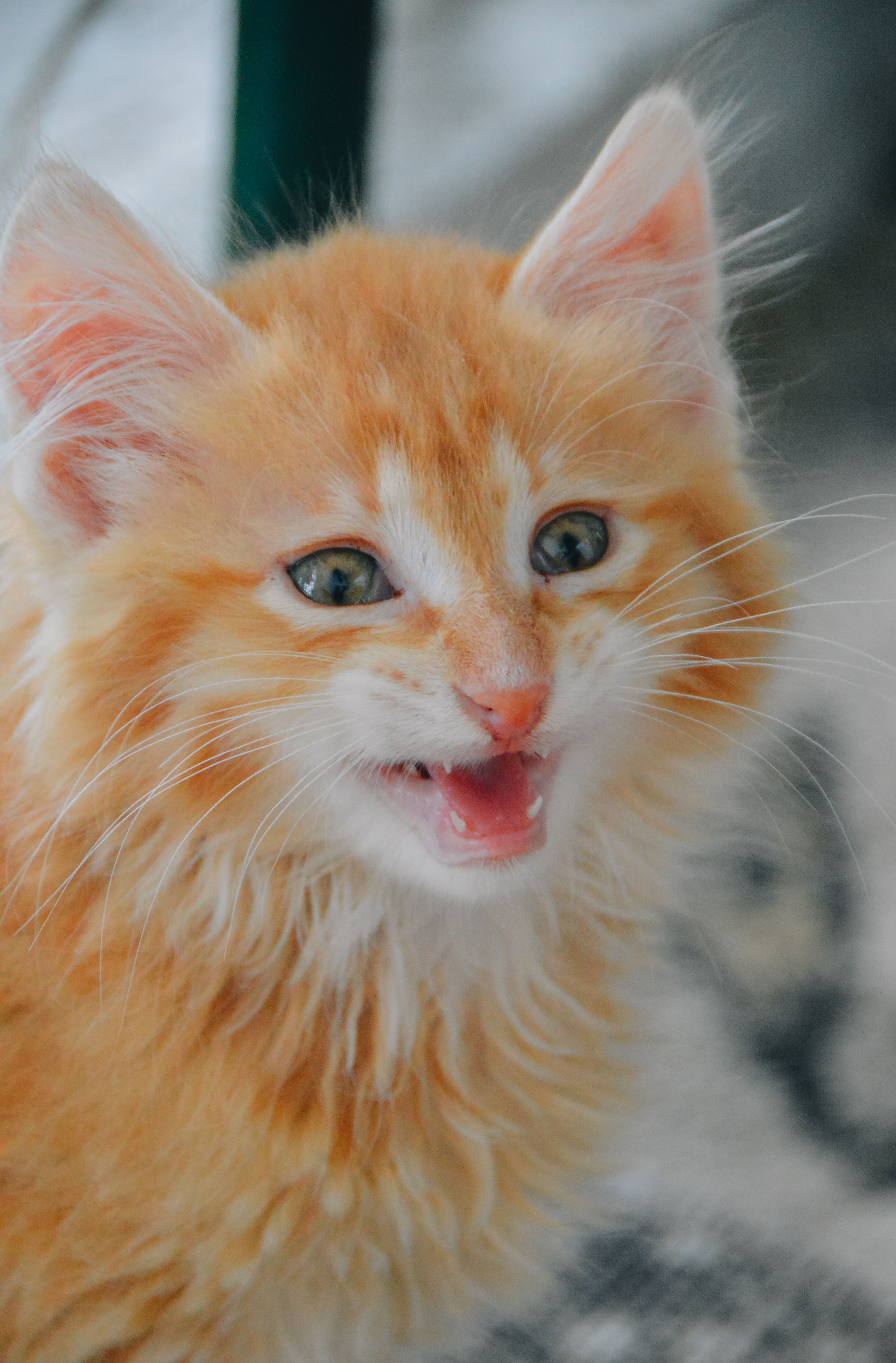
First, yes: orange cats really are mostly male
The internet did not invent this one.
Orange coat colour in domestic cats is linked to the X chromosome. Because male cats usually have one X chromosome and one Y chromosome, a single orange version of the relevant gene can be enough to give them that glorious marmalade coat. Females usually have two X chromosomes, so the genetics work differently. [S1]
The result? Orange males are much more common than orange females.
It is one of those facts that becomes impossible to forget once you know it — particularly when the orange cat in question is currently attempting to enter a cardboard box three sizes too small.
The mystery was only recently cracked in detail
Scientists had understood for a long time that the orange trait was X-linked, but the exact genetic mechanism remained surprisingly elusive.
Recent research identified a small deletion associated with the orange colour and linked it to altered activity of a gene called ARHGAP36 in pigment-producing cells. [S1]
That is the serious genetic explanation.
The Miaoulogie explanation is that nature spent an impressive amount of molecular effort producing the colour of toast.
And what about tortoiseshell cats?
This is where things become especially beautiful.
A female cat can carry an orange version on one X chromosome and a non-orange version on the other. Early in development, cells randomly switch off one of the two X chromosomes. Different patches of skin therefore express different colour instructions.
That cellular patchwork creates the famous tortoiseshell and calico coats — one of the most elegant examples of genetics visible from across the room. [S1]
Orange does not mean “chaotic” — sadly
Orange cats have acquired a formidable online reputation.
They are portrayed as affectionate, ridiculous, fearless and occasionally in possession of one communal brain cell shared between the entire orange-cat population.
Wonderful internet folklore. Not a scientific personality classification.
Coat colour alone does not allow us to predict whether an individual cat will steal your sandwich, fall off the sofa or become a highly competent household administrator.
Those achievements belong to the individual.
Some places really do have more orange cats
Cat populations can develop unusual colour patterns when they descend from a relatively small founder group.
On Aoshima in Japan — an island famous for its cats — researchers found a particularly high frequency of the orange allele compared with nearby populations. [S2]
That does not mean islands magically manufacture ginger cats. It shows how the history of a small population can leave a visible signature in the colours we see generations later.
Your orange cat is carrying a little piece of history
So the next time a ginger cat appears in your feed, remember that the colour is doing more than looking photogenic.
It reflects sex-linked genetics, the biology of pigment cells and, in some populations, a little bit of demographic history too.
Whether it also explains why the same cat has just knocked a glass off the table remains outside the scope of current science.
Sources
S1 — Molecular and genetic characterization of sex-linked orange coat color in the domestic cat.
S2 — Genetic profile of domestic cat (Felis catus L.) population of Aoshima Island (Japan).